San Diego County Single Family Housing Market Spring 2025 Trends and Forecast
Overview of Current Market Conditions in Spring 2025
The San Diego County housing market in 2025 remains robust, defined by strong buyer demand and very limited inventory of homes for sale. Despite rising prices and competition, the area’s highly desirable lifestyle and diverse neighborhoods continue to attract buyers from across California and beyond. In other words, San Diego is still a seller’s market – even as higher mortgage rates and affordability challenges temper some of the frenzy, the market stays resilient. Current homeowners are seeing near record-high home values and brisk sales, while buyers face tight supply and stiff competition.
In this article, we’ll examine current inventory levels, pricing trends (median prices and appreciation rates), sales trends (sales volume, days on market, sale-to-list price ratios), and expert predictions for the rest of 2025. We’ll also highlight differences across various San Diego neighborhoods – including a spotlight on Chula Vista – to inform homeowners about the market’s opportunities and challenges in their area.

(All data is for single-family homes unless otherwise noted.)
Inventory Levels: Low Supply Continues to Drive the Market
One of the defining features of San Diego’s 2025 market is the scarcity of homes for sale. Inventory has remained near historic lows, which props up home prices and leads to competitive bidding for available homes. Many would-be sellers are holding off on listing, often because they’re locked into ultra-low interest rates from prior years or can’t find an affordable downsizing option. Baby Boomers, for example, are staying in their homes longer instead of selling, since there are few replacement homes and they don’t want to give up their sub-3% mortgage rates. This “lock-in” effect keeps resale inventory tight.
As of early 2025, active listings countywide number only a few thousand – far below normal for a region of this size. (By comparison, Chula Vista, one of the county’s largest cities, had just 309 homes listed for sale as of March 2025.) This equates to roughly 2 months of housing supply, whereas a balanced market is around 5–6 months. In practical terms, most new listings get snapped up quickly. Homes go pending in a median of only ~2–4 weeks on market in San Diego County, reflecting how constrained supply is relative to demand.
Several factors contribute to the low inventory: high homeowner equity (so sellers feel no pressure to sell), reluctance to trade a cheap mortgage for today’s higher rates, and a pace of new home construction that hasn’t kept up with population growth. Even though new listings trickle in each month, they often barely meet buyer demand, keeping the market competitive. Limited inventory is the key challenge underpinning San Diego’s market, and it’s a double-edged sword for homeowners: it bolsters your home’s value, but it also means finding your next home locally can be difficult.
Home Price Trends: High Prices with Modest Appreciation
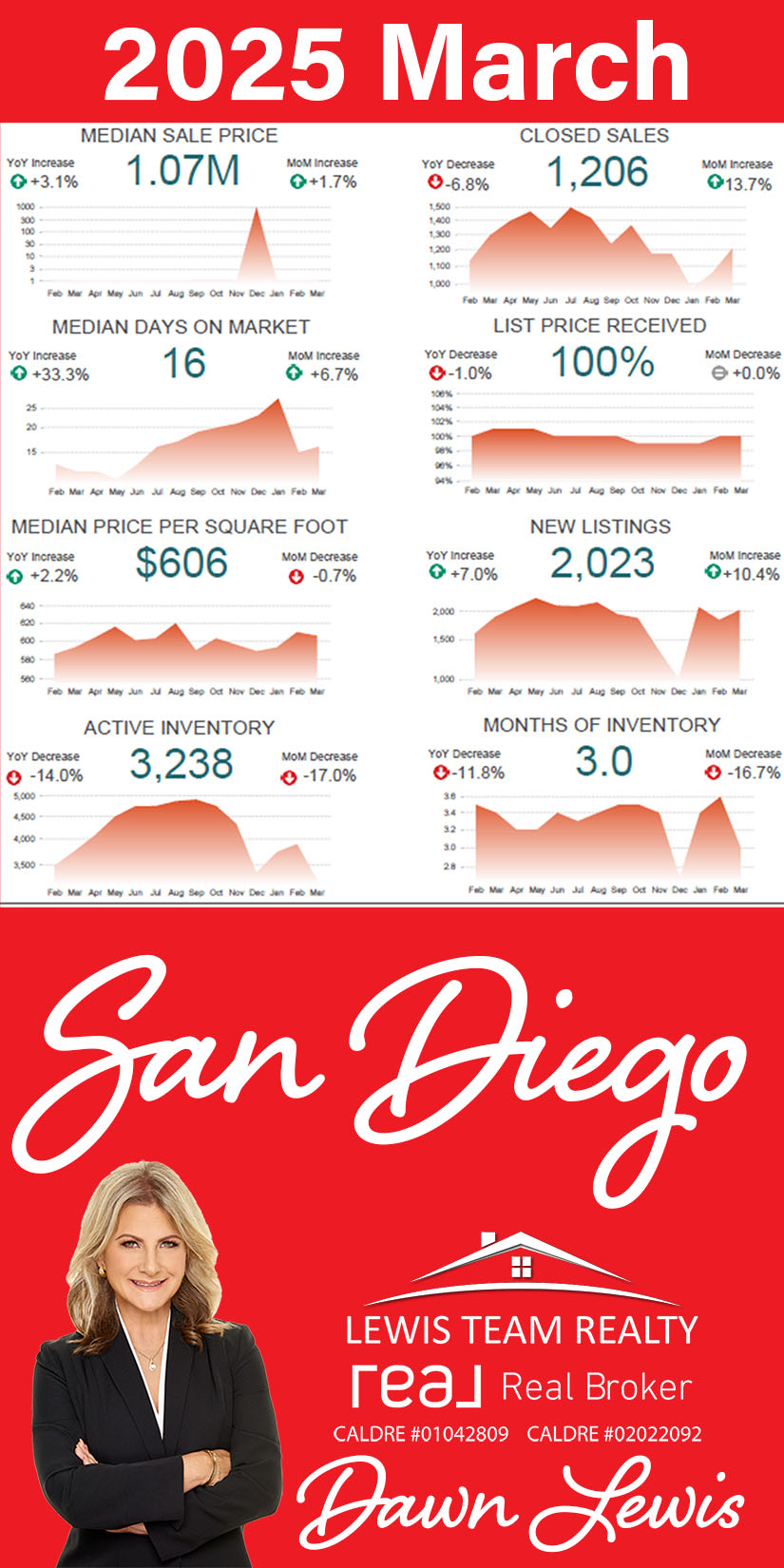
Home prices in San Diego County remain at or near all-time highs in 2025. The median price for a single-family home in the county is around $1 million, and it has been holding steady or rising slightly year-over-year. For instance, the median sold price in March 2025 was about $1.04 million, roughly 2% higher than a year prior (March 2024’s $1.02 M). This modest appreciation suggests that prices have largely plateaued at a high level after the rapid run-up of previous years. Similarly, the median listing price in the county at about $950,000 in early 2025, essentially flat compared to a year ago. In short, home values are up slightly year-on-year, but nowhere near the double-digit annual jumps seen during the pandemic boom.
It’s important to note these figures cover all of San Diego County – individual neighborhoods show a range of trends. Overall, San Diego’s typical home value is about $953,000 and has increased 2.3% over the past year. The price per square foot is around $600 on average, up only marginally (+0.3% YoY in Feb 2025), reflecting that prices have leveled off.
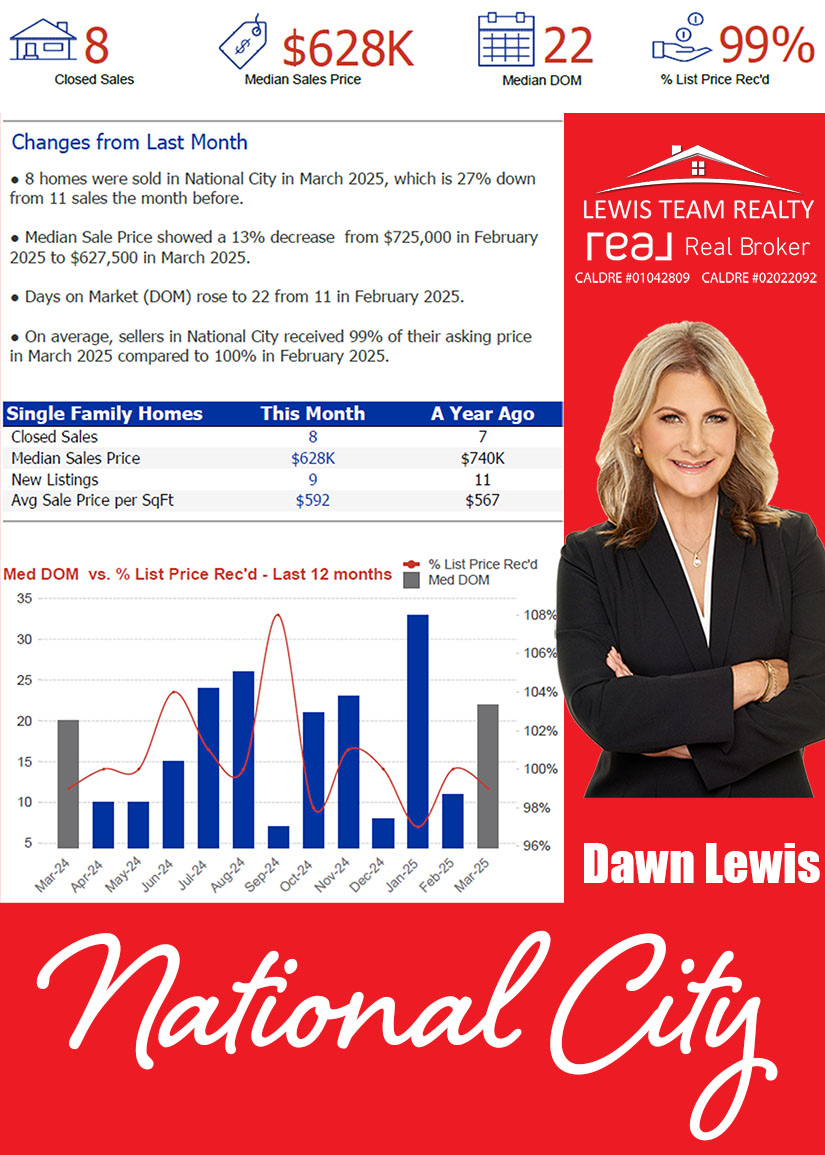
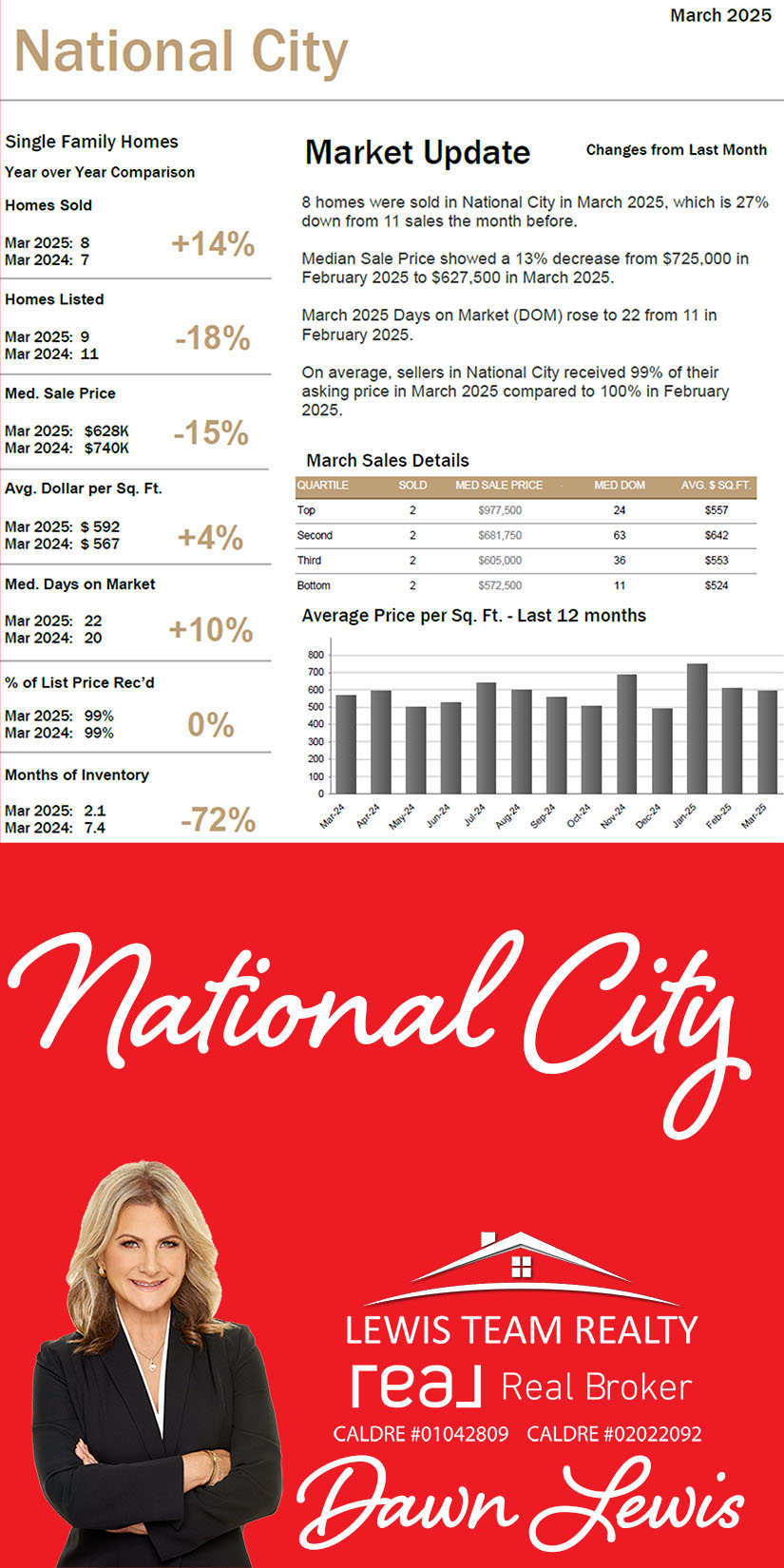
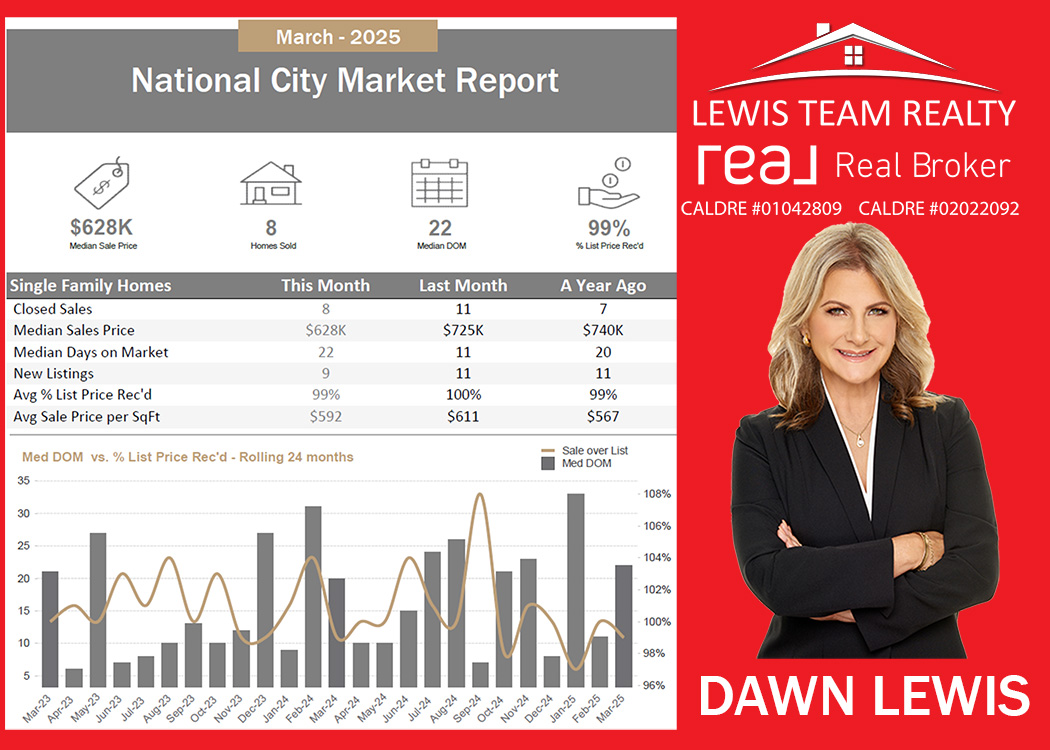
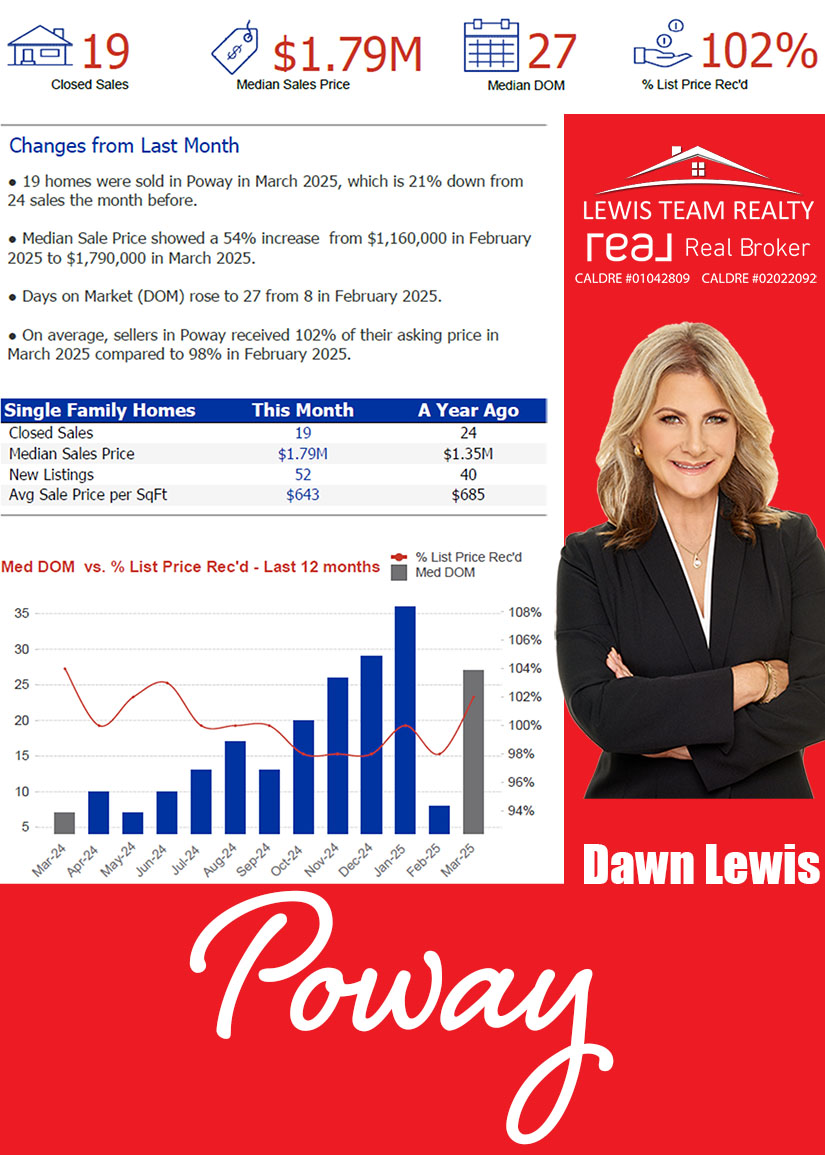
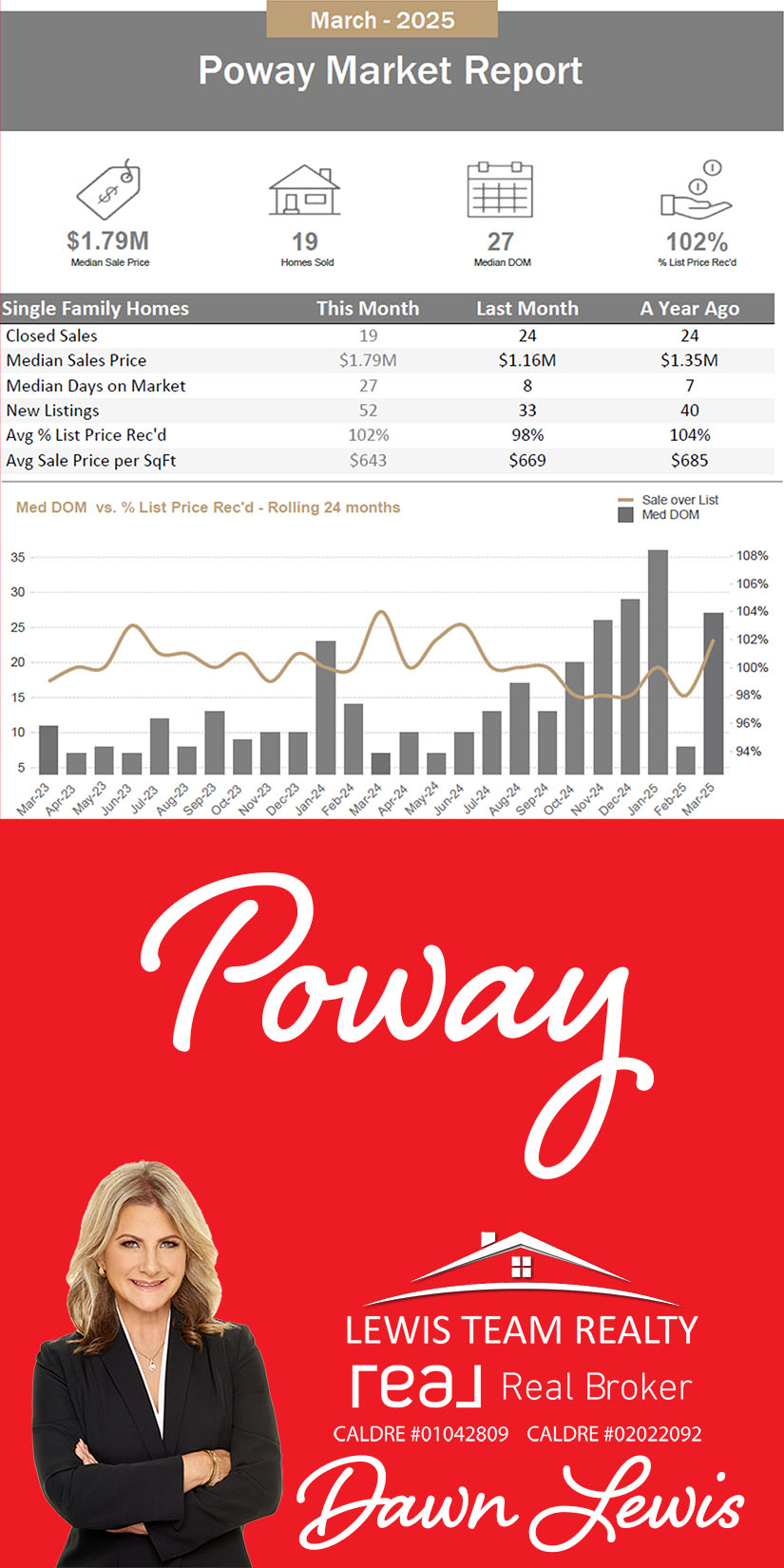
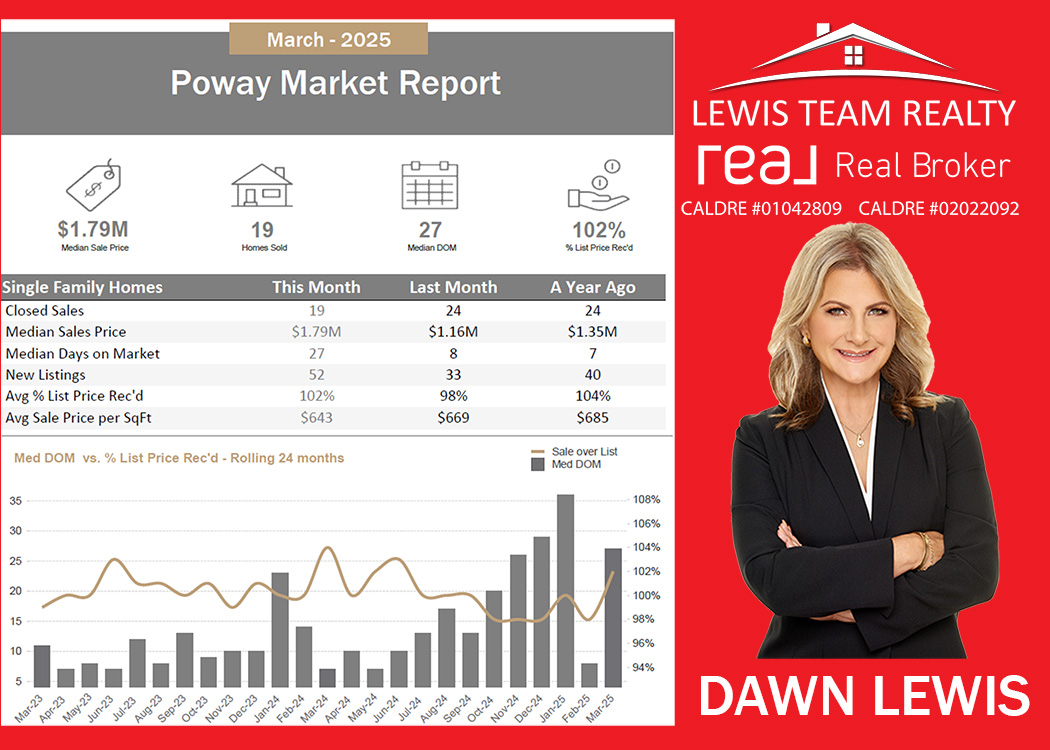
Neighborhood Variations: Price trends vary by location. Many higher-end communities are still seeing price growth, while some entry-level neighborhoods have experienced slight price declines year-over-year. For example, in March 2025 the median single-family home in National City (South Bay) sold for about $628,000, which was down from $740,000 a year earlier. This suggests a -15% annual drop in that more affordable market. In contrast, upscale areas like Poway (North County Inland) saw median prices surge to $1.79 million, up from $1.35M a year prior (a +32% jump). Such a big increase in Poway may partly be due to a few high-end sales, but it underscores that demand remains strong for luxury and move-up homes.
Most areas fall somewhere between these extremes. Chula Vista, a major suburb in South Bay, exemplifies a relatively middle-range market: its median sale price was about $760,000 in early 2025, up roughly 2% from the previous year (mirroring the county average). At the same time, Chula Vista’s median list price was around $791,000, indicating sellers are pricing confidently. Many North County coastal and central San Diego neighborhoods still have medians well above $1M. In more affordable inland pockets, medians can be in the $600K–$800K range.
Appreciation rates have certainly cooled from the frenzied 20%+ gains seen in 2021. Over the past year, most San Diego neighborhoods saw low single-digit price changes (either up or down a few percent). A few “hot” neighborhoods did register double-digit gains – for example, San Diego’s San Carlos area saw a +15.6% YoY price jump as of late 2024 – but those are the exception now. By and large, prices are high but are growing slowly. For current homeowners, this means your property’s value is holding strong, though the days of explosive appreciation are behind us for now.

Sales Activity and Market Pace
Home sales volume in San Diego has been running below normal, mainly due to the limited supply of listings (and, to a lesser extent, higher interest rates softening demand at the margins). In early 2025, the number of homes sold was down about 7–8% compared to a year prior. For example, in February 2025 roughly 1,684 single-family homes sold, versus 1,824 in Feb 2024. Fewer transactions don’t necessarily mean lack of buyer interest – rather, there aren’t enough homes on the market to meet demand, and some buyers are getting priced out. Homes that do hit the market are still selling briskly.
Days on Market (DOM): Houses are taking a bit longer to sell than they did during the peak frenzy, but they’re still moving quickly by historic standards. The typical San Diego home sells in about 2 to 4 weeks. In February, median DOM was 28 days, up from just 18 days a year prior. This uptick indicates a slightly less frenzied pace, but a month to sell a home is still very fast. In high-demand areas or desirable price segments, it’s not uncommon for well-priced listings to go pending in under two weeks. (In Chula Vista, for instance, the median time to pending was just 16 days as of March 2025.) Homes are not languishing on the market – most attract offers quickly, especially if move-in ready and priced appropriately.
Sale-to-List Price Ratios: Sellers are still getting very close to their asking prices on average. The average sale-to-list price ratio in San Diego is about 99–100% for 2025, meaning homes generally sell at the listing price or slightly above/below it. As of early 2025, sellers received 100% of asking price at the median (a one-to-one ratio). This is a slight change from the ultra-competitive market of a year or two ago, where many homes routinely sold over asking. In spring 2022, the county’s sale-to-list ratio averaged 102%+ (with a majority of homes fetching multiple bids). Now, the bidding wars have mildly cooled – but nearly half of all listings still sell above list price in many areas. For example, in Chula Vista about 49% of sales in early 2025 were above the asking price, and roughly only 31% sold below list (the rest at exactly list). This shows that while buyers aren’t universally grossly overbidding anymore, competition remains fierce for the most attractive homes. Multiple offers are common, and it’s still a seller’s market advantage: well-priced, well-marketed homes often get full price offers or better.
Overall, market speed and dynamics reflect a still-strong seller’s market, just a tad more balanced than the feeding frenzy of the pandemic years. Current homeowners looking to sell can expect favorable conditions (quick sales at top dollar), but should also be prepared for discerning buyers who have more options than last year and are sensitive to pricing and condition. Buyers, on the other hand, need to act decisively when a good home hits the market, but might face a bit less craziness than the peak – possibly even room for standard contingencies or a small price negotiation on some listings.
Neighborhood Spotlights: Chula Vista and Other Areas
San Diego County is a large and diverse region – market conditions can differ between the urban core, coastal communities, and suburban cities like Chula Vista. Here are a few neighborhood highlights to illustrate the range of conditions:
• Chula Vista (South Bay): As noted, Chula Vista’s single-family homes have a median price around $750K-$800K in 2025, up slightly (2%) year-over-year. Demand is healthy – half of listings sell above asking – and the typical home sells in just over two weeks. Inventory is somewhat limited (just 309 homes for sale in a city of ~275,000 people), which keeps competition relatively high. For homeowners in Chula Vista, the market presents an opportunity to sell quickly at a good price; the trade-off is finding an affordable replacement home locally can be tough.
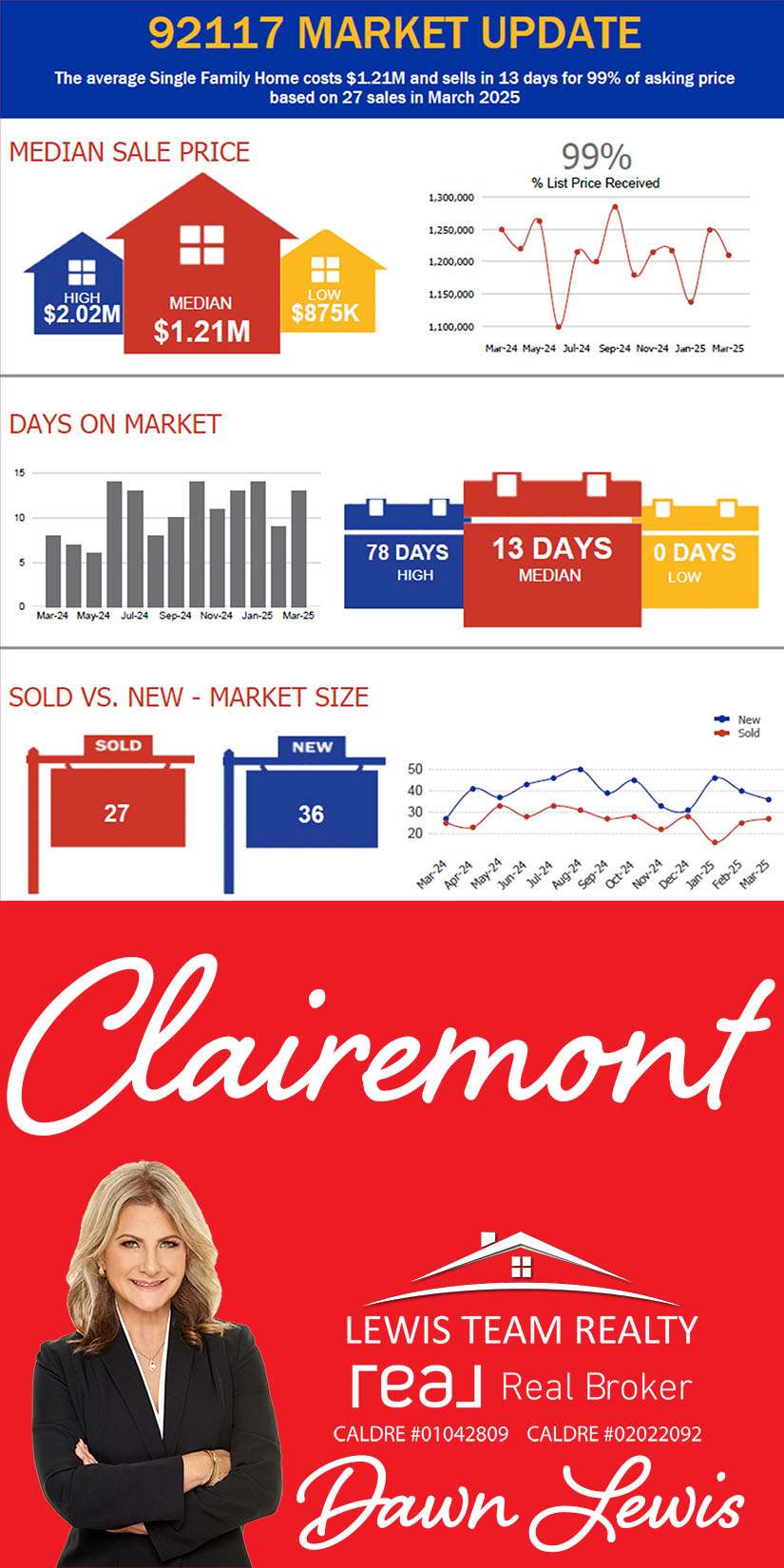
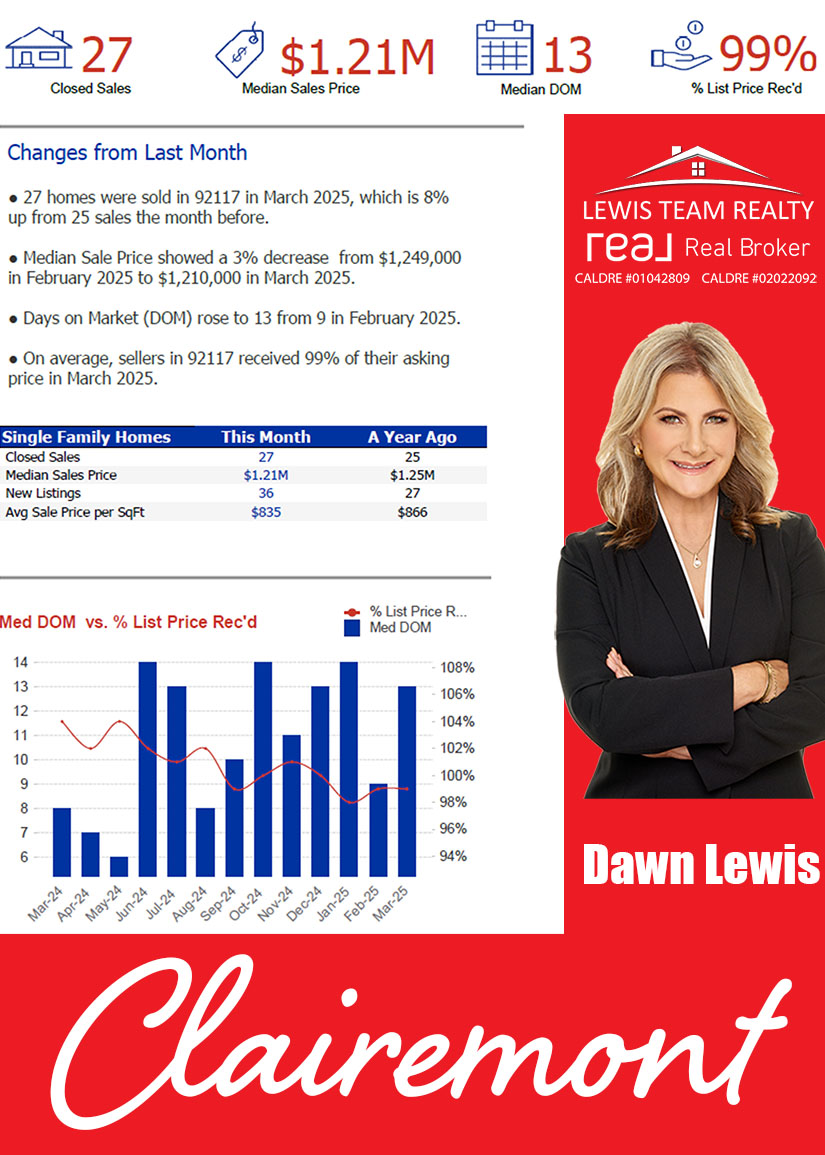
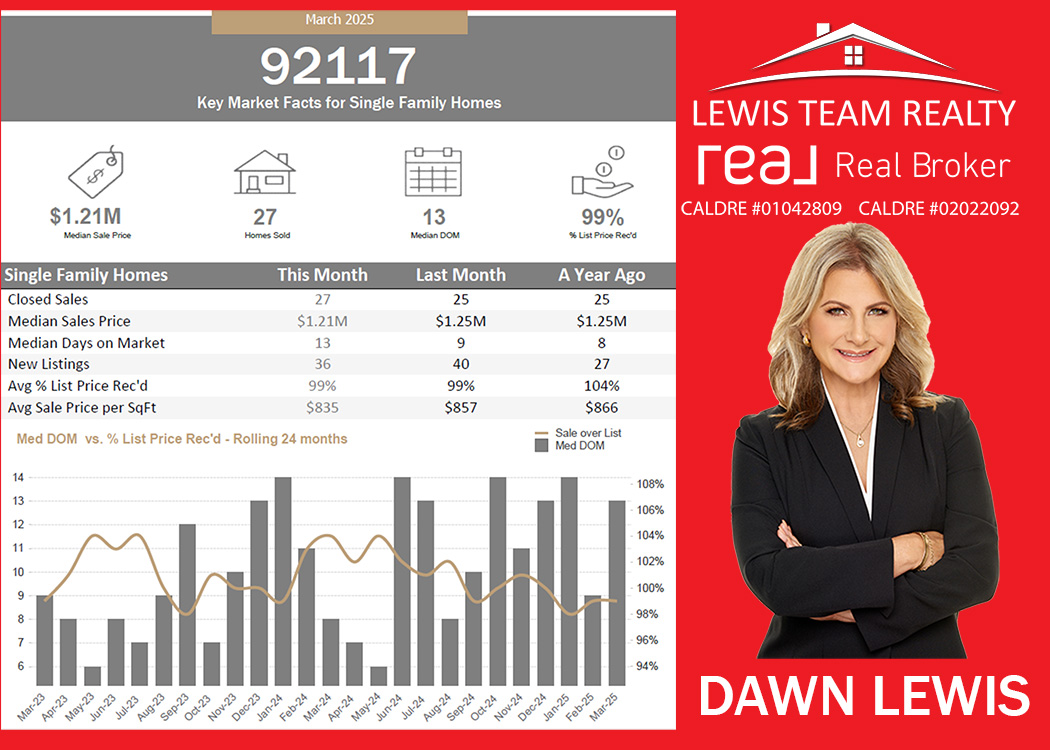
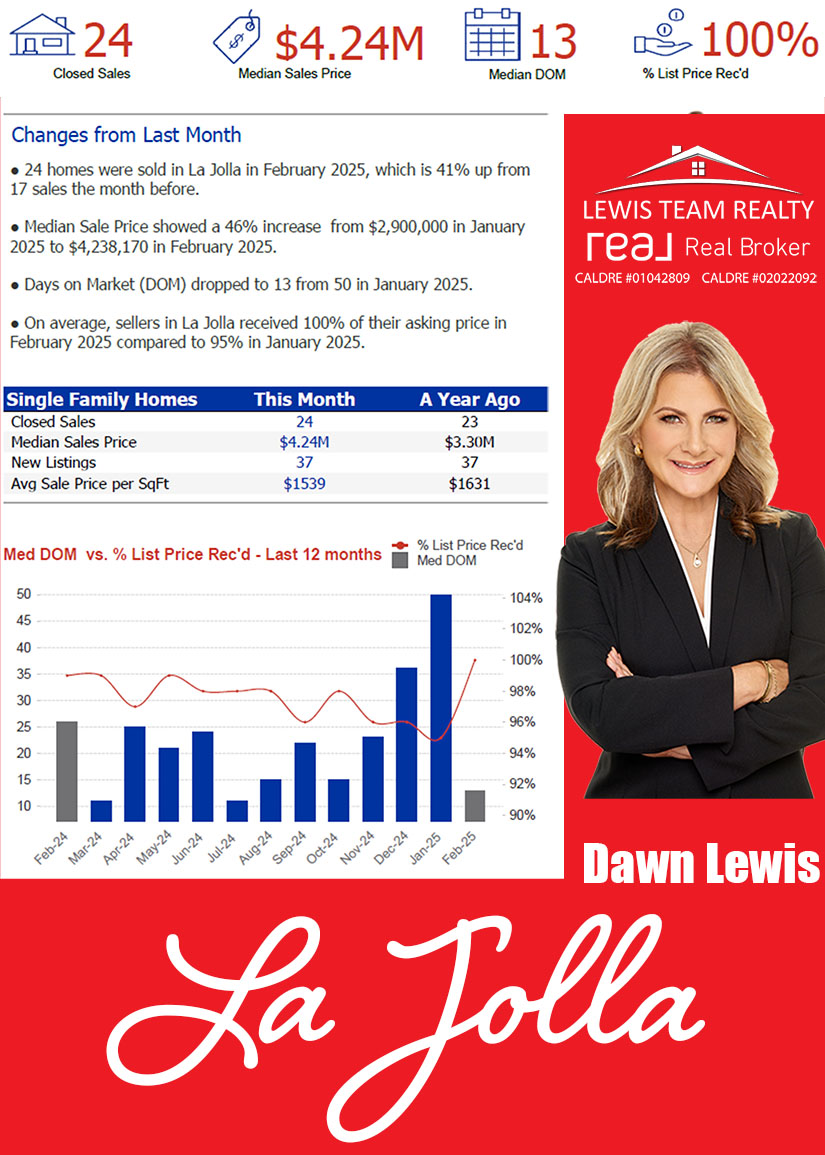
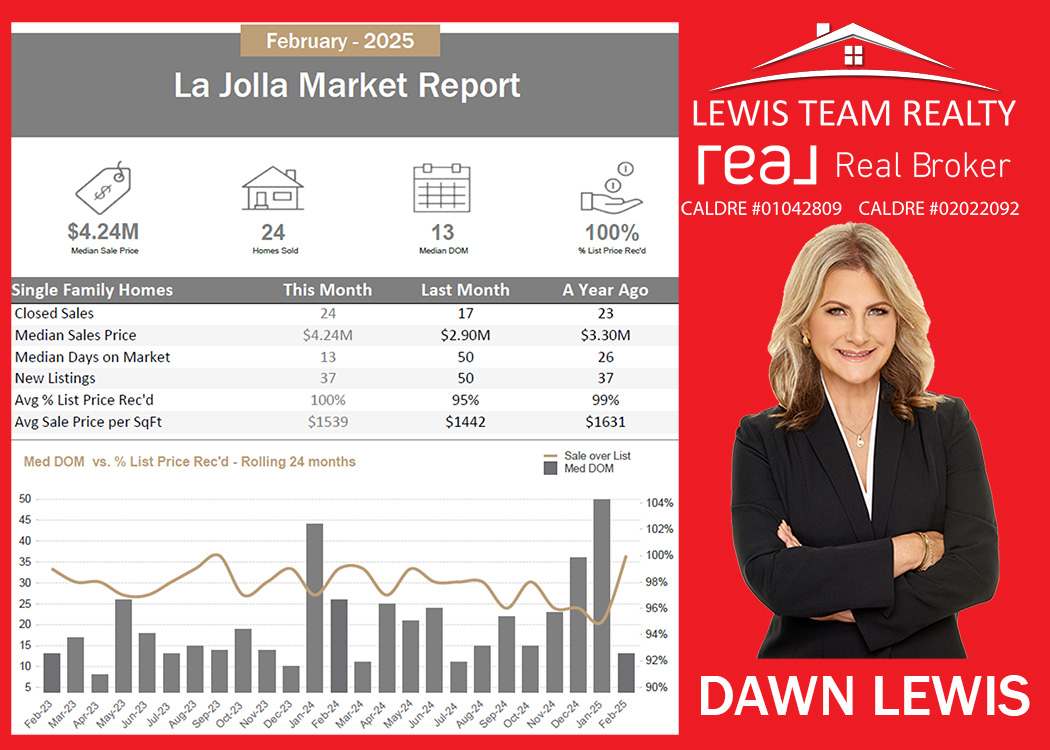
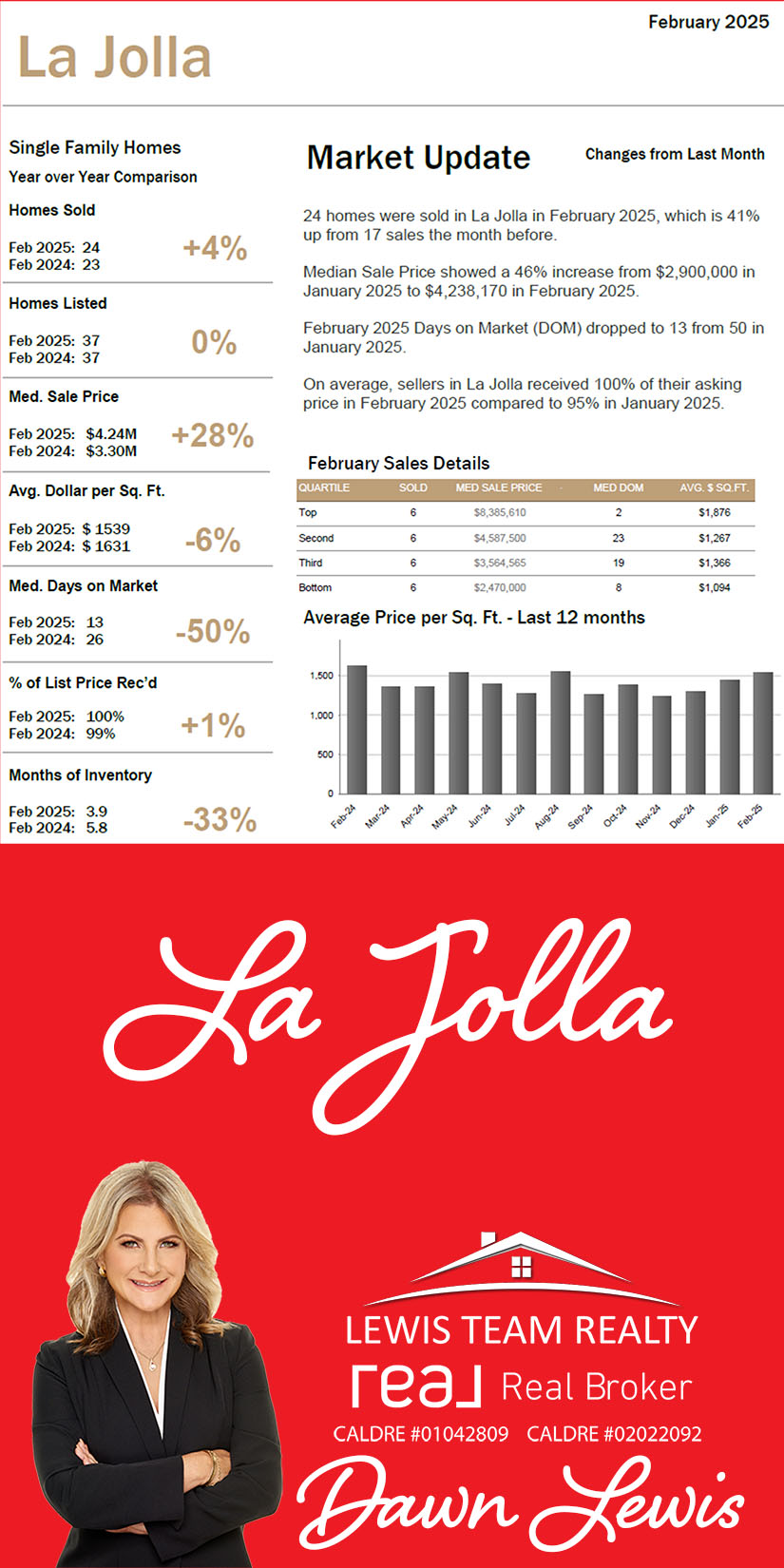
• Central & Coastal San Diego: Neighborhoods in the city of San Diego (like North Park, La Jolla, Clairemont, etc.) and the coastal North County (Encinitas, Carlsbad) generally see higher price points and strong demand. Many of these areas have median prices well above the county median (often $1M+). They also tend to have extremely low inventory. Homes in coastal neighborhoods especially remain in high demand from both local move-up buyers and relocators drawn by the beach lifestyle. It’s common for desirable listings in these areas to receive multiple offers and sell above list. For example, one report ranked San Diego among the nation’s “hottest” housing markets for 2025 – a Zillow forecast put San Diego in the top ten most competitive markets, reflecting the enduring demand in these popular neighborhoods.
• Inland and Entry-Level Markets: In more affordable communities farther from the coast – for instance, parts of Escondido, El Cajon, National City – prices are lower but buyers here are very cost-sensitive. As noted, National City actually saw a slight price decline year-over-year. Higher interest rates hit entry-level buyers hardest, so those markets cooled a bit more. Still, the inventory in these areas is tight as well, and well-priced homes will sell. Homes may take a little longer to find the right buyer if priced at the top of the range. Sellers in these neighborhoods need to watch their pricing closely, but they benefit from the general lack of competition (since new construction starter homes are virtually non-existent).
• High-End Suburbs: Posh suburban areas like Poway, Rancho Bernardo, and La Jolla have seen resilient or even surging prices. Poway, for example, experienced a big bump in its median price to $1.8M (up over 30% YoY. While that spike is unusual, it underlines that upper-tier buyers are still active – many in this segment are less rate-sensitive (often using large cash down payments or buying all-cash). These neighborhoods often have unique properties that draw competitive bids. Homeowners in high-end areas are in an enviable position with significant equity gains and plenty of interested buyers; however, if they plan to stay in the area, “trading up” will mean jumping into an equally strong market on the buy side.
Overall, all San Diego neighborhoods are experiencing a seller-favored market, just to varying degrees. Whether you’re in Chula Vista or Carlsbad, inventory is relatively scarce and demand is steady. The key differences are in price points and buyer demographics, which influence how fast homes sell and whether prices are inching up or flattening. Current homeowners should pay attention to their specific locale – your strategy (and opportunities) might differ slightly based on your neighborhood’s trend (e.g., pricing aggressively vs. pricing conservatively, timeline to sell, etc.).
Forecast for Late 2025: What’s Ahead?
Looking at the remainder of 2025, experts anticipate a gradually calming but solid market. There is no sign of a major price drop or “crash” on the horizon – in fact, most forecasts predict flat to slightly rising prices for San Diego by year-end. Expects home prices to possible rise around 1% to 3% in the next year, on top of 2024’s high baseline. Zillow economists likewise foresee San Diego home values ticking up modestly (after a minor dip in late 2024, they projected a +0.6% rebound by mid-2025. The market’s long-term fundamentals – limited supply and persistent demand – support a slow upward trend in prices going forward. In other words, 2025 will likely end with home values a bit higher than where they started.
On the sales front, many real estate pros expect activity to pick up slightly as 2025 progresses. If mortgage interest rates ease down into the low 6% or high 5% range, that could unlock more buyer demand (and encourage some move-up sellers), resulting in more transactions. Of course, if rates remain elevated (7%), the market may stay at its current tepid sales pace. Most forecasts call for continued tight inventory – unless a wave of new listings hits (which is not apparent now), sellers will retain the advantage.
Market opportunities and challenges for the rest of 2025: Current homeowners stand to benefit from the forecasted stability. Your home equity will likely remain intact or grow modestly. If you plan to sell, you can do so knowing buyer demand is expected to stay strong (San Diego was recently ranked one of 2025’s most competitive markets). However, the flip side is finding your next home – trade-up buyers will still face competition and high prices for the limited inventory available. Affordability will remain a challenge for many buyers if prices inch up further and rates don’t drop significantly.
One potential game-changer to watch is interest rates. Should inflation cool and mortgage rates fall notably, we could see a surge of buyers who have been waiting on the sidelines, which would quickly tighten the market even more. Alternatively, any economic downturn or job loss trend could soften demand. But absent a major economic shift, San Diego’s housing in 2025 is poised to remain on a steady course of high demand, low supply, and gradual price growth.
Opportunities and Challenges for Homeowners in 2025
For homeowners evaluating their positions, the current market presents both positives and negatives:
• Opportunity – High Equity & Seller’s Market: San Diego home values are near record highs, so homeowners have built substantial equity. Those looking to sell can capitalize on these prices. With listings still receiving 99-100% of asking on average, you’re likely to get top dollar. Plus, low inventory means less competition from other sellers – your home (if priced right) will attract serious buyers. This could be a great time to downsize or cash out, as demand for housing in San Diego remains robust.
• Challenge – Buying Again is Tough: If you do sell, finding a replacement home locally is challenging. Inventory shortages mean you’ll have limited choices, and you’ll be competing with other buyers in a market where prices are high. Additionally, higher mortgage rates can be a shock if you’ve been locked into a low rate on your current home. Many homeowners are hesitant to trade a 3% rate for a 7% rate on a new loan – a significant factor keeping people in place. Moving up or even downsizing could result in a higher monthly payment unless you have a lot of equity to put down.
• Opportunity – Refinancing/HELOC Caution: While refinancing to a lower rate isn’t an option in the current rate environment, homeowners with equity might consider a HELOC (home equity line of credit) or cash-out refi (despite higher rates) if they want to tap some equity for renovations or other investments. With prices so high, many have a cushion of equity to work with – but one should be cautious and mindful of interest costs.
• Challenge – Affordability & Property Taxes: Sky-high home values mean property taxes and insurance can be significant for new buyers. If you’re a long-time owner with Prop 13 protections (in California), your taxes are low – but buying a new home at today’s prices could reset your tax base much higher. That’s another factor dissuading some empty-nesters from moving. Affordability is a broader challenge; many young families are priced out, which could affect demand for mid-tier homes if interest rates don’t relent. However, as an existing homeowner, you’re on the advantageous side of this equation (you’ve already got your foot in the door of homeownership in a high-cost market).
• Opportunity – Remodeling and Adding Value: Because buying “up” is pricey, some homeowners are choosing to invest in upgrades or additions to their current homes instead. For example, building an ADU (granny flat) or doing strategic renovations can both enhance your living space and increase your home’s value, taking advantage of the strong market. With San Diego allowing more ADUs, this could be an opportunity to create rental income or space for family, leveraging your property’s equity.
In summary, San Diego’s single-family housing market in 2025 offers strong value for homeowners: your investment has appreciated and the market conditions favor you if selling. The challenges lie in the next steps – buying another home in the same market or affording a home here if you’re not already in one. Market conditions for the rest of 2025 are expected to remain in your favor as a homeowner, with stable or slowly rising prices and persistent demand. By staying informed on neighborhood trends and forecasts, you can make savvy decisions about whether to sell, buy, or hold, and how to navigate the opportunities and hurdles this dynamic market presents.
Conclusion
San Diego County’s real estate landscape in 2025 can be summed up in a phrase: strong but sustainable. The frenzy of past years has eased slightly, yet the market is far from weak – it’s balanced on a high plateau. Low inventory and high demand continue to support prices, making it an attractive market for current homeowners. While price growth is not as rapid as before, homeowners are enjoying record equity, and those who do choose to sell are reaping excellent returns in short order. On the other hand, buyers face high costs and competition, a situation unlikely to dramatically improve until supply increases or economic conditions shift.
For current homeowners, the San Diego market offers a wealth of opportunity in 2025 – whether that means selling into a seller’s market, leveraging equity, or simply enjoying the knowledge that your home’s value is holding strong. The key challenges will be planning your next move in a tight market and navigating the affordability squeeze if financing a new purchase. By understanding the trends (low inventory, steady prices, quick sales) and keeping an eye on forecasts (gradual growth ahead), you can make the most of San Diego’s market conditions. San Diego’s housing market looks set to remain resilient through 2025, underscoring the enduring appeal and economic strength of “America’s Finest City” for homeowners and buyers alike.
Thinking about selling your home in San Diego?
Thinking about buying a home in San Diego?
Call Dawn Lewis and The Lewis Team today.
619-656-0655
San Diego’s Real Estate Team